Beginner yoga: do you need to be flexible to start?
Let’s be honest.
If you are reading this article, you may well have thought:
“Yoga is not for me. I am not flexible.”
It is the belief number one among people who hesitate to walk into a yoga studio.
And yet…
You do not need to be flexible to start yoga.
It is an outcome.
You do not need to become flexible before practising.
You can become more flexible through practice.
Yoga is for everyone. The postures adapt to you.
Why is this belief so common?
The images we see everywhere show impressive postures: splits, advanced balances and extremely flexible bodies.
But these images represent only a small part of yoga.
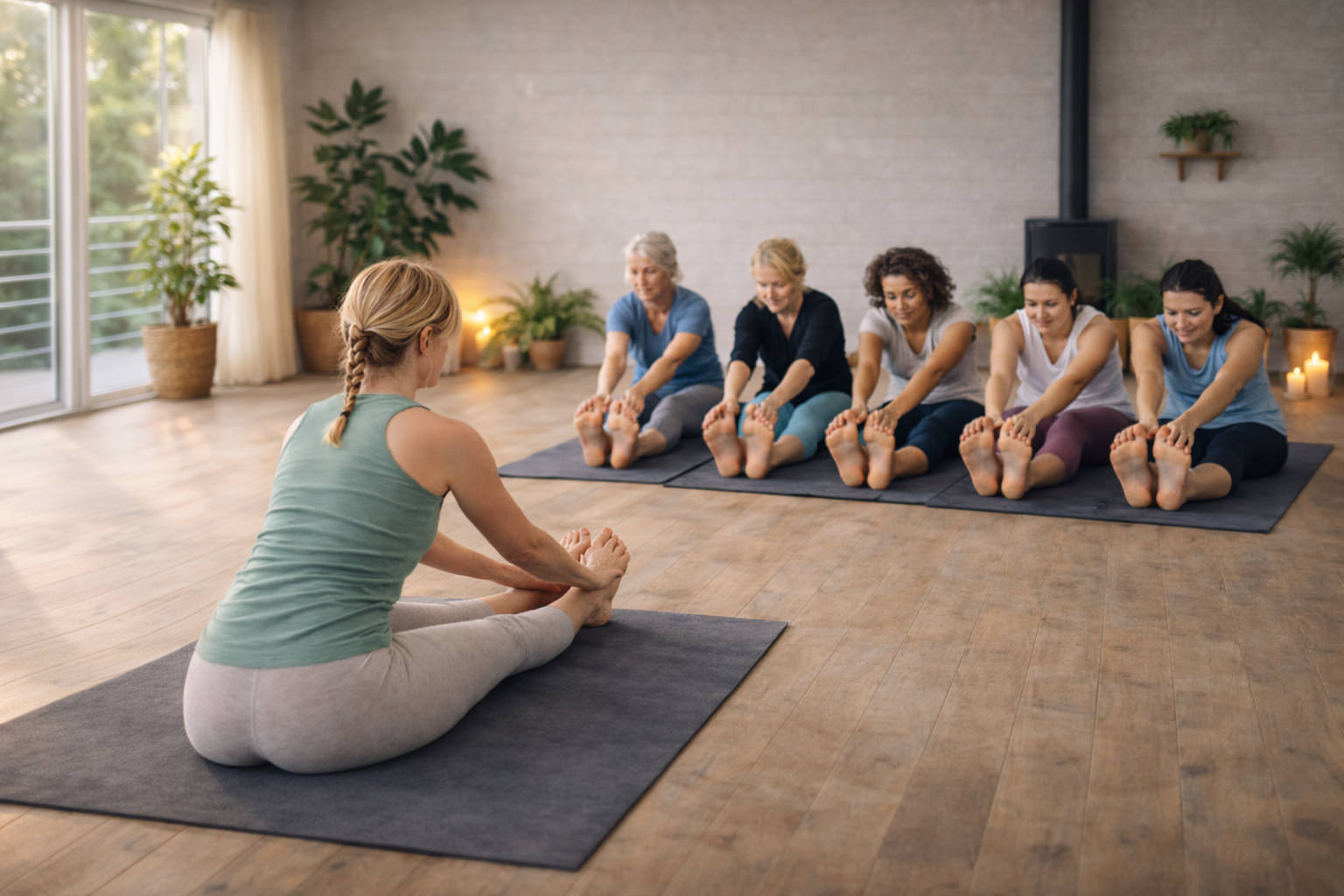
A beginner’s yoga class is very different in reality:
- Gradual movement
- Ongoing adaptations
- Accessible postures
- A non-competitive atmosphere
Yoga is not a performance sport.
It is a practice of listening.
People who feel stiff can have plenty to gain from an adapted practice.
What yoga really develops — beyond flexibility
When starting yoga, you develop:
- Joint mobility
- Muscle relaxation
- Mindful breathing
- Stability
- Connection with your body
People who start out thinking they are stiff often discover something else:
What they really needed was movement… and time for themselves.
How do you start yoga if you are not flexible?
1. Choose a beginner-friendly class
If you are starting out, avoid jumping straight into a very intense practice.
A gentle yoga class with a gradual Hatha approach can help you:
- Learn the basics
- Understand alignment
- Respect your limits
- Build confidence
In Burgundy, particularly around Dijon, more and more studios offer classes designed for beginners.
It is a good place to start.
2. Let go of the need to go further
In yoga, maximum flexibility is not the aim.
We look for the sensation that feels right.
If your hands do not reach the floor, bend your knees.
If your heels do not touch the mat, that is fine.
Progress is not measured in centimetres.
Progress is about comfort and breathing.
3. Make the most of guidance in a studio
YouTube can inspire you, but if you are starting yoga with limited flexibility, nothing replaces:
- A teacher’s attentive eye
- Personalised adjustments
- Adaptations offered as you practise
- A reassuring space
Practising at a studio such as Flow Yoga Studio offers guidance to help you avoid unnecessary strain and find suitable adaptations.
Guidance makes a difference.
3 simple postures for a gentle start:
Here are three accessible movements, even if you feel very stiff:
• Child’s pose
Kneel and let your upper body relax forwards.
It stretches the back gently and may help you settle.
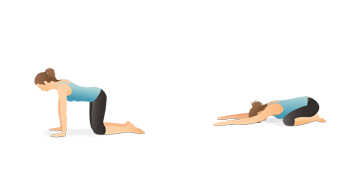
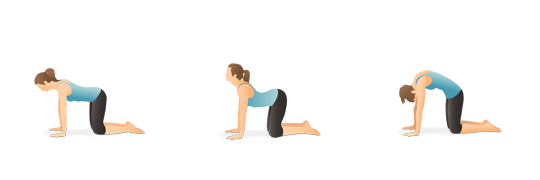
• Cat–cow
On all fours, gently alternate rounding and arching your back with your breath.
It is a useful way to gently mobilise your spine.
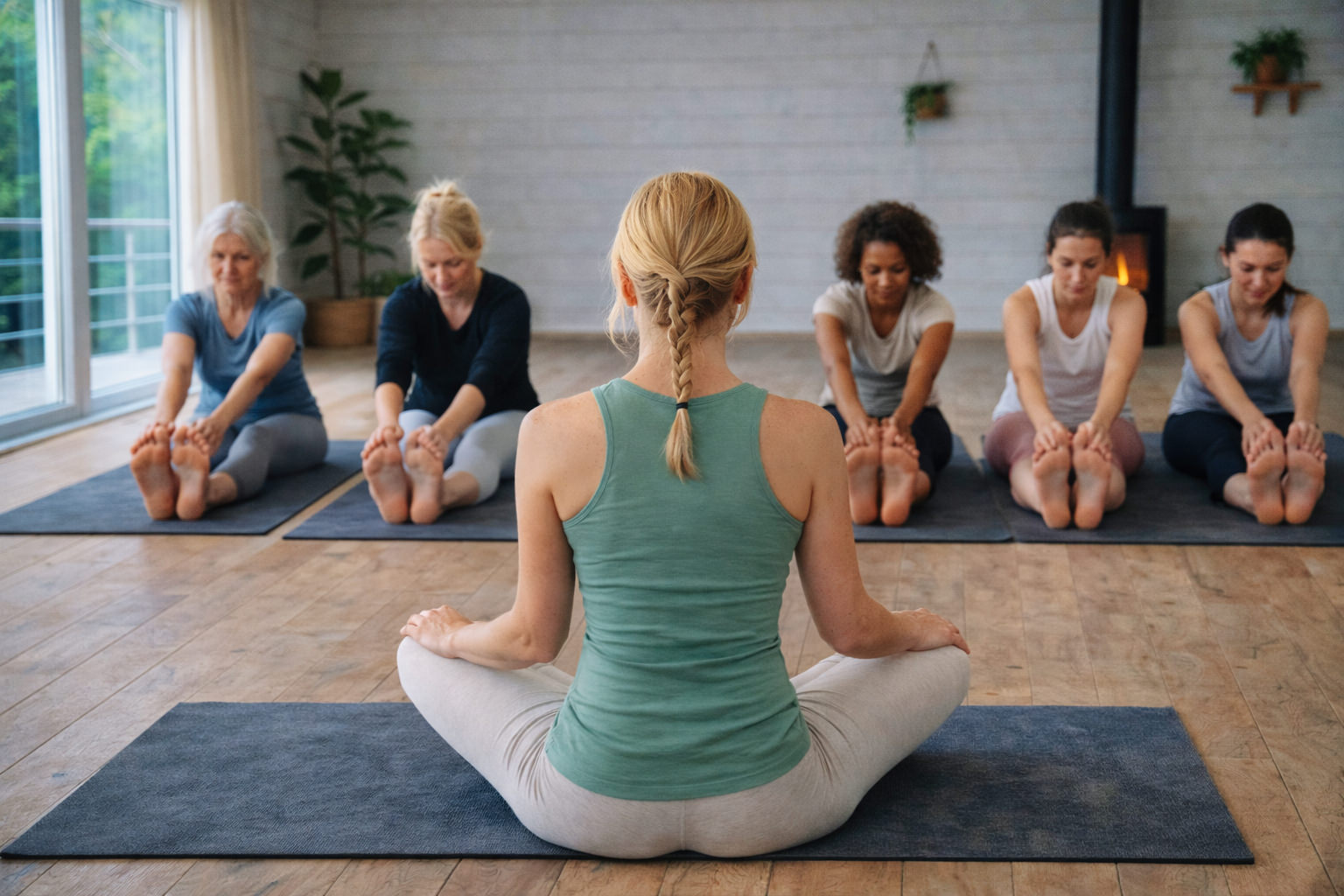
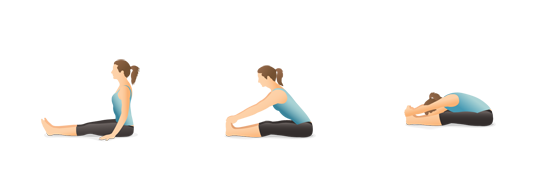
• Seated forward fold — adapted version
Sit with your knees slightly bent if needed.
Gently fold forward, without trying to reach your feet.
Breathing matters more than how far you reach.
How long does it take to become more flexible?
The good news: your body can adapt.
With regular practice, even once a week, you may notice over a few weeks:
- Less stiffness when you wake up
- More ease of movement
- A steadier posture
- A reduction in stress
Consistency matters more than intensity.
Starting yoga: the first step is the hardest
Whether you live in Côte-d’Or, between Dijon and Pouilly-en-Auxois, in the Ouche Valley or the Auxois area, starting yoga asks just one thing:
Take that first step. Come and try Flow Yoga Studio.
Nobody expects you to do the splits.
Nobody will judge you.
Most students starting out feel exactly as you do today.
A few weeks later, they wonder why they waited so long.
In a few words
If you think you are not flexible enough for yoga, an adapted beginner’s class could be a good place to start.
Yoga does not require a perfect body.
It supports your body as it is.
Flexibility can follow.
So does confidence.
It all begins with a first class. See you soon!